

A Neuromuscular Pain Processing Retrospective
By Jooj Dudin, LMT | Jooj Neuromuscular
Pain feels instant. But the way it travels through your body is actually quite complex. Understanding pain signal speed and how the brain processes it reveals why discomfort lingers, why posture matters, and how neuromuscular therapy can create lasting relief.
At JOOJ Neuromuscular, this insight is key to correcting dysfunction at its source – not just managing symptoms.
Learn about Neuromuscular Therapy: https://joojneuromuscular.com/neuromuscular-therapy/
What Is Pain Signal Speed?
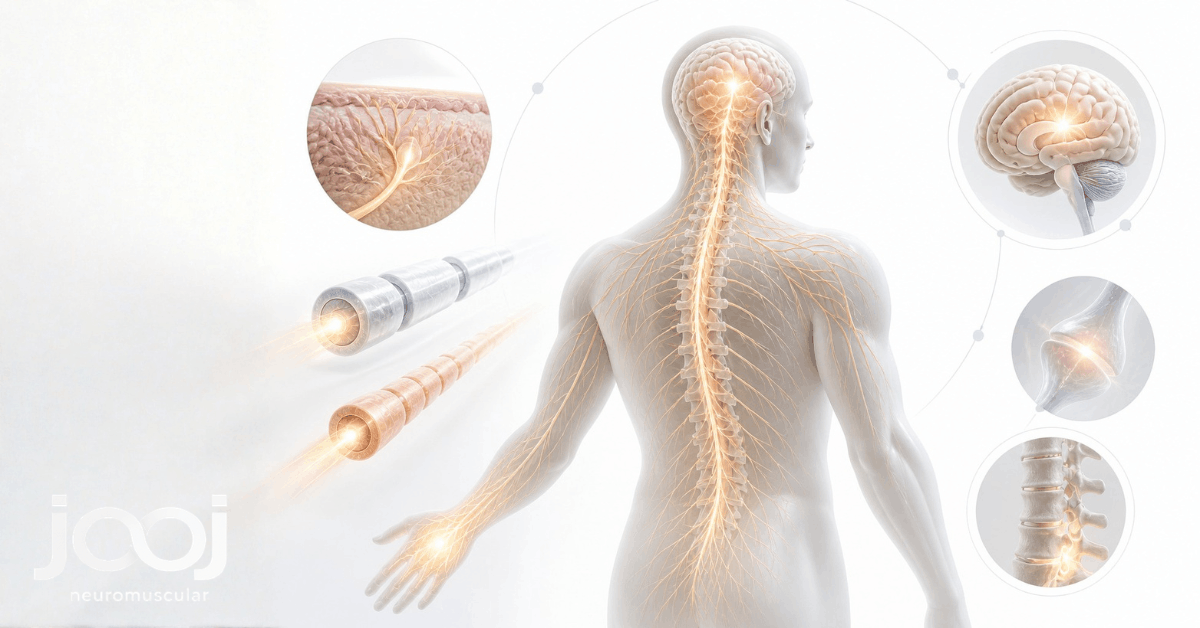
Pain begins at nociceptors – specialized receptors in muscles, joints, and connective tissue that detect potential damage. These receptors convert stimuli into electrical signals that travel through the nervous system.
But not all pain moves at the same speed.
There are two main pain processing pathways:
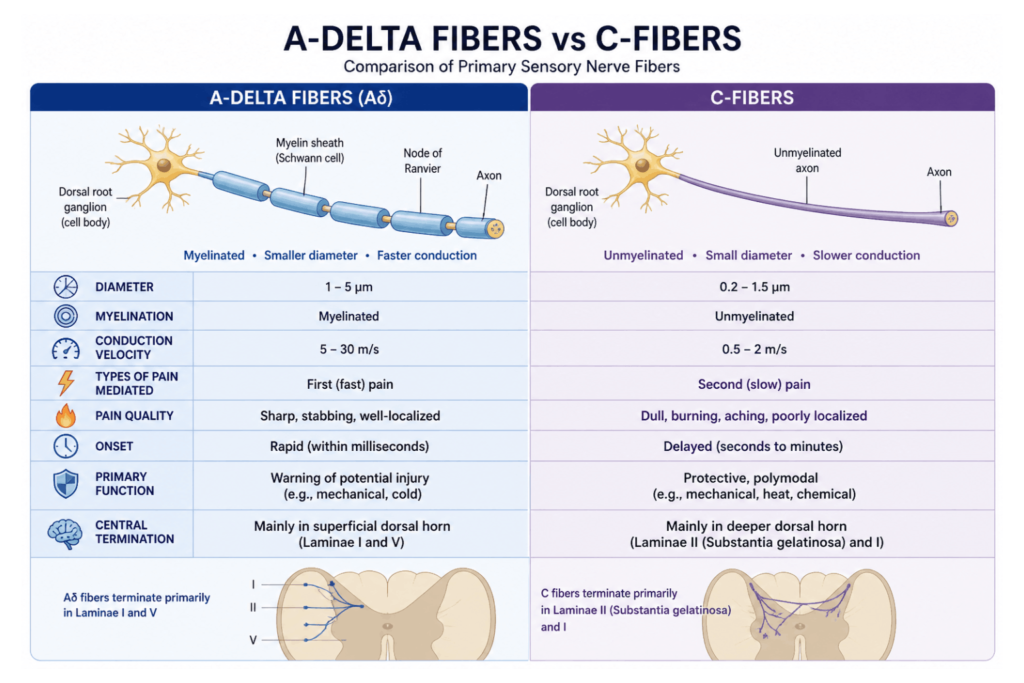
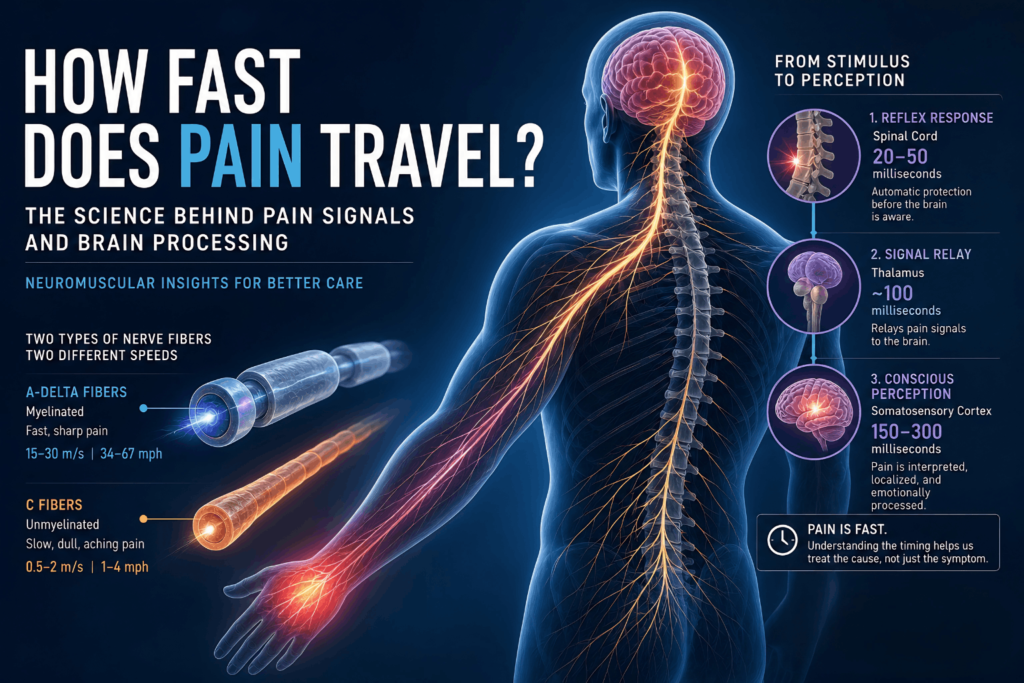
– Fast pain (A-delta fibers): Sharp, immediate pain traveling about 15–30 m/s (34–67 mph). This is what makes you pull your hand away from a hot surface instantly.
– Slow pain (C fibers): Dull, aching, or burning pain traveling about 0.5–2 m/s (1–4 mph). This is the lingering discomfort that follows.
This dual system explains why pain often comes in two waves – first sharp, then persistent.
Reflex vs. Perceived Pain
Your body doesn’t wait for your brain to react.
– Spinal reflex: Happens in 20–50 milliseconds. The body withdraws from danger before you consciously feel pain.
– Brain processing: Takes about 150–300 milliseconds. The brain interprets location, intensity, and emotional meaning.
Pain isn’t just physical; it’s a perception shaped by your nervous system.
Chronic Pain Causes
Chronic pain often starts with a clear physical problem, but it can persist long after the original injury should have healed, especially when the nervous system keeps sending or amplifying pain signals. Common causes include arthritis, back and spine problems, nerve damage, old injuries, fibromyalgia, headaches or migraines, diabetes-related nerve pain, surgery, infection, and cancer.1,2,3
Chronic pain is not only about tissue damage; it is also about pain processing. Pain begins when nociceptors detect harmful stimuli and turn them into electrical signals, which travel through peripheral nerves to the spinal cord and brain, where the signals are interpreted as pain. In chronic pain, this system can become overactive or less efficient at turning pain down, so the brain may keep receiving strong pain messages even when the original cause is smaller or no longer present.3,4,5,1
The nervous system plays a central role in this process because it both carries pain signals and helps regulate them. When nerves are damaged or misfiring, as in neuropathic pain, the pain can feel burning, shooting, tingling, or electric. Conditions like fibromyalgia may involve central sensitization, where the nervous system becomes extra sensitive and processes normal sensations as painful.4,6,7,1,3
Stress, previous injury, aging, and smoking can also increase the risk of chronic pain or make it worse. In short, chronic pain often comes from a mix of body damage, nerve dysfunction, and altered pain processing in the brain and spinal cord.2,1,3
Why Pain Persists
Pain is not always a sign of injury. In many chronic cases, it reflects dysfunction in the neuromuscular system.
Common contributors include:
– Muscle imbalances
– Poor movement patterns
– Joint restrictions
– Altered proprioception (phantom pain)
Over time, these issues can lead to central sensitization, where the nervous system becomes overly responsive and continues producing pain signals even without active tissue damage.
This is why stretching or resting alone often fails to solve chronic pain.
The Link Between Posture and Pain
Posture is not just about standing up straight – it’s a reflection of how your nervous system controls movement.
When posture breaks down…
– Some muscles become overactive while others weaken
– Joint mechanics become inefficient
– Stress on tissues increases
This creates a feedback loop of dysfunction and pain.
Effective postural correction requires retraining the nervous system—not just forcing alignment.
How Neuromuscular Therapy Helps
Neuromuscular therapy works by directly influencing how pain is generated and processed.
Key effects include:
– Reducing pain signals: Stimulates mechanoreceptors that help block nociceptive input (gate control theory).
– Releasing muscle tension: Decreases pressure on irritated tissues.
– Improving circulation: Supports healing and reduces inflammation.
– Restoring movement patterns: Re-educates the nervous system for efficient, pain-free motion.
Instead of chasing symptoms, this approach addresses the root cause of dysfunction.
Why This Matters for Treatment
If pain can travel at different speeds and be amplified by the nervous system, then treating it requires more than a local fix.
A neuromuscular approach:
– Identifies the source of dysfunctional input
– Corrects movement and posture patterns
– Reduces long-term pain recurrence
At JOOJ Neuromuscular, treatment focuses on restoring balance across the entire system so the body stops producing unnecessary pain signals.
Learn about Neuromuscular Therapy: https://joojneuromuscular.com/neuromuscular-therapy/
Key Takeaway
Pain can travel anywhere from 1 to 67 mph depending on the nerve fibers involved. But speed is only part of the story—how the brain processes and interprets those signals determines your experience.
That’s why lasting relief depends on addressing neuromuscular dysfunction, improving posture, and retraining the nervous system—not just masking symptoms.
Frequently Asked Questions About Pain Signal Speed
How fast does pain travel to the brain?
Pain can reach the brain in as little as 150 to 300 milliseconds, depending on the type of nerve fiber involved. Fast-conducting A-delta fibers transmit sharp, immediate pain signals, often triggering a reflex response within 20–50 milliseconds at the spinal cord level before conscious awareness occurs. Slower C-fibers carry dull, aching pain signals that arrive later and persist longer.
What is the speed of nerve pain signals?
Nerve pain signals travel at different speeds depending on the fiber type:
- A-delta fibers: approximately 15–30 meters per second (m/s)
- C-fibers: approximately 0.5–2 m/s
This difference explains why sharp pain is felt quickly, while dull or burning pain develops more slowly and lingers.
Why are some types of pain felt faster than others?
Fast pain is carried by myelinated A-delta fibers, which have an insulating sheath that allows rapid signal transmission. Slow pain is carried by unmyelinated C-fibers, which conduct signals more gradually. This biological difference creates the familiar pattern of initial sharp pain followed by a slower, throbbing sensation.
What happens before the brain perceives pain?
Before the brain becomes aware of pain, the body can initiate a reflex response at the spinal cord level. This occurs within milliseconds and allows you to withdraw from harmful stimuli quickly. The signal is then relayed to the brain via the thalamus, where it is processed and interpreted consciously.
Is pain perception the same as pain signal speed?
No. Pain signal speed refers to how fast electrical impulses travel along nerves, while pain perception is how the brain interprets those signals. Perception can be influenced by factors such as attention, stress, past experiences, and overall nervous system sensitivity.
How does understanding pain signal speed help with treatment?
Understanding how fast pain travels helps clinicians target the source of the signal, not just the symptom. Treatments like neuromuscular therapy, shockwave therapy, and nerve modulation techniques aim to influence how pain signals are generated, transmitted, and processed—helping reduce both acute and chronic pain more effectively.
References
1. Cleveland Clinic. Chronic pain: what it is, symptoms, treatment. Accessed May 2, 2026. https://my.clevelandclinic.org/health/diseases/4798-chronic-pain
2. Cedars-Sinai. Chronic pain. Accessed May 2, 2026. https://www.cedars-sinai.org/health-library/diseases-and-conditions/c/chronic-pain.html
3. NCBI Bookshelf. The anatomy and physiology of pain. Accessed May 2, 2026. https://www.ncbi.nlm.nih.gov/books/NBK219252/
4. Lone Star Neurology. How pain works: the nervous system’s response. Accessed May 2, 2026. https://lonestarneurology.net/others/how-the-nervous-system-detects-and-interprets-pain/
5. Science.gov. Painful gonarthrosis results: topics by. Accessed May 2, 2026. https://www.science.gov/topicpages/p/painful+gonarthrosis+results
6. Center for Pain Management. Top 7 most common causes & symptoms of chronic pain. Accessed May 2, 2026. https://www.centerforpainmanagement.org/blog/most-common-causes-symptoms-of-chronic-pain/
7. Science.gov. Pain controversies current: topics by. Accessed May 2, 2026. https://www.science.gov/topicpages/p/pain+controversies+current
8. NCBI Bookshelf. Chronic pain. StatPearls. Accessed May 2, 2026. https://www.ncbi.nlm.nih.gov/books/NBK553030/
9. U.S. Pain Foundation. Chronic pain overview: everything you need to know. Accessed May 2, 2026. https://uspainfoundation.org/pain/
10. PMC. Neurological diseases and pain. Accessed May 2, 2026. https://pmc.ncbi.nlm.nih.gov/articles/PMC3281476/
11. Idaho Pain Relief. When can pain become chronic? Signs, causes, and. Accessed May 2, 2026. https://www.idahopainrelief.com/blog/when-can-pain-become-chronic/
12. Complete Neurological Care. The neurology of pain: how our brains interpret pain. Accessed May 2, 2026. https://www.completeneurologicalcare.com/post/the-neurology-of-pain-how-our-brains-interpret-pain
13. Merck Manuals. Chronic widespread pain. Accessed May 2, 2026. https://www.merckmanuals.com/home/brain-spinal-cord-and-nerve-disorders/pain/chronic-widespread-pain
14. Hinge Health. Chronic pain flare-ups: causes and coping strategies. Accessed May 2, 2026. https://www.hingehealth.com/resources/articles/pain-flare-up/
15. Expert Pain Care. Chronic pain and the central nervous system. Accessed May 2, 2026. https://www.expertpaincare.com/blog/chronic-pain-and-the-central-nervous-system