

Movement Analysis Louisville KY
Clinical movement analysis to identify root causes of pain, posture dysfunction, and movement inefficiency.
What Is Movement Analysis
Movement analysis is a structured clinical assessment that evaluates posture, joint motion, muscle coordination, and neuromuscular control. It identifies dysfunction patterns that contribute to pain or injury. This approach prioritizes root-cause findings rather than symptom-based treatment.
Like neuromuscular therapy, movement analysis examines how the body moves as a system. It includes posture correction evaluation, gait observation, and targeted orthopedic and neuromuscular testing.
It is commonly used to assess issues such as back pain, sciatica, and chronic muscle tension.
How Movement Analysis Works
Posture Correction, Sensors, and Research
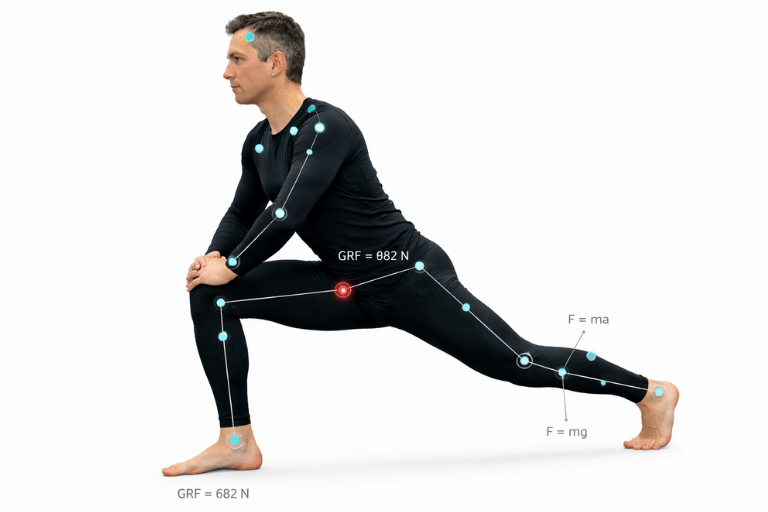
Movement analysis works by combining visual assessment, palpation, and functional testing to detect the biomechanical inefficiencies prerequisite to neuromuscular therapy. Tools such as posture correction sensor feedback and clinical observation help identify patterns like head forward posture correction needs and poor sitting mechanics.
- Static posture evaluation
- Dynamic movement testing
- Muscle mapping for tone and activation patterns
In Neuromuscular Therapy, movement evaluation goes beyond structural assessment to examine how the body actually moves—focusing on motor control, coordination, and the compensation patterns that lead to pain. This approach is best understood through these six components of movement analysis.
Posture & Structural Alignment
- Head position (forward head posture)
- Shoulder symmetry
- Spinal curves (cervical, thoracic, lumbar)
- Pelvic tilt and rotation
- Weight distribution
Gait & Functional Movemen
- Walking pattern (symmetry vs compensation)
- Heel-to-toe mechanics
- Single-leg stability
- Balance under load Clinical insight: Movement reveals dysfunction before pain appears.
Motor Control & Coordination
- Smooth vs jerky movement
- Timing of muscle activation
- Compensation patterns
- Fine motor vs gross motor control
Range of Motion
- Active vs passive differences
- Movement quality vs quantity
- Restrictions under load
- Pain during movement
Neurological Integration
- Reflexive stability
- Balance (Romberg-type concepts)
- Eye-head coordination (VOR relevance for posture)
Symmetry & Compensation Mapping
- Load shifting patterns
- Protective movement strategies
What Movement Analysis Helps
Common conditions include:
- Chronic back pain
- Sciatica
- Neck pain
- Posture correction needs
- Shoulder dysfunction
- Hip and pelvic imbalance
- Gait Stability
- Repetitive strain injuries
How We Use Movement Analysis
The Jooj Method uses movement analysis combined with muscle mapping to identify precise dysfunction patterns. Neuromuscular treatment is then applied directly to the structures responsible for pain, not just the area of symptoms.
Each session integrates:
- Movement analysis Louisville KY assessment
- Muscle mapping to locate trigger points and dysfunction
- Targeted manual therapy
- Corrective strategies for posture correction
Point Body Scan
What to Expect During Your Session
A movement analysis session includes assessment, treatment, and guided correction. The goal is to identify dysfunction, reduce pain, and improve movement efficiency within the same visit.
Your session may include:
- Postural assessment and posture correction sensor feedback if applicable
- Functional movement testing
- Hands-on neuromuscular therapy
- Education on correct sitting posture and movement habits
Movement Analysis Provider - Jooj Dudin, LMT
Jooj Dudin, LMT, is a European-trained neuromuscular therapist licensed in Kentucky. Her clinical approach emphasizes movement analysis, muscle mapping, and precise manual therapy. She focuses on identifying biomechanical and neuromuscular dysfunction patterns rather than treating symptoms alone. Her training supports structured assessment and targeted intervention for complex pain presentations in Louisville.

Frequently Asked Questions
What is movement analysis used for
Movement analysis is used to identify the root cause of pain, posture issues, and movement dysfunction. It guides targeted treatment instead of generalized therapy.
How is movement analysis different from massage
Massage focuses on relaxation or symptom relief. Movement analysis identifies dysfunction and directs treatment based on clinical findings.
What conditions do you treat
We treat conditions including chronic back pain, sciatica, neck pain, shoulder pain, and postural dysfunction through structured neuromuscular therapy.
Do you use posture correction sensors
In some cases, posture correction sensor tools or feedback methods are used to enhance accuracy and patient awareness.